
When we talk about renewable energy, one question comes up time and again: How can all families—especially renters, seniors, and working-class households—find a way to participate and save money?
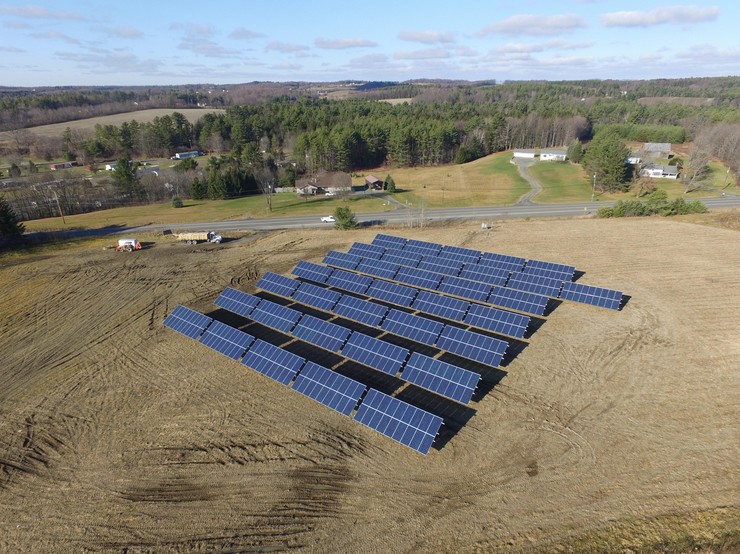
Right across our state border in Illinois, a case study published by The Pew Charitable Trusts offers an answer. Highlighting a 2-megawatt community solar project in suburban Chicago, Pew’s research demonstrates how state-supported community solar policy can deliver guaranteed savings directly to residents who can’t put panels on their own roofs.
The case study explains how community solar opens up clean energy benefits to customers often left out of the market:
“The flyer introduced Dianne to community solar, a type of distributed energy resource that allows consumers to benefit from solar energy without installing panels on their roofs. For renters or households unable to afford upfront installation costs, community solar opens access to energy savings that otherwise would be out of reach. Amid rising energy costs across the country, this approach not only supports cleaner energy but provides a pathway to more affordable bills.”
The real-world impact for local residents on fixed or modest incomes is immediate and measurable:
“Because the Torrence project predominantly serves communities with low-to-moderate household incomes, it plays an important role in addressing energy burden, a metric that defines the percentage of income a household spends on electricity bills. On average, low-income households have an energy burden of 6%, which is three times higher than that of other households… Through discounted electricity rates, subscribers receive guaranteed savings on their energy bills. During its first year of operation… the Torrence project delivered an estimated $186,000 in total customer savings.”
Furthermore, the case study shows that community solar isn’t just about reducing utility bills. It’s also an economic engine for the broader community, supporting local agriculture through dual-use practices like solar grazing and creating local construction and maintenance jobs:
“Development and construction activities—including more than $3.5 million in local and regional supplier spending and the generation of more than $1 million over the next 20 years from property taxes and lease payments—have further supported the local economy.”
As Illinois demonstrates, when policymakers establish frameworks that allow community solar to thrive, everybody wins: ratepayers save money, local governments gain tax revenue and agricultural families gain new income streams.
As utility bills continue to climb and expensive fossil fuels continue to present health risks, we’re hopeful that Indiana will embrace policies that give Hoosier families these same choices.